
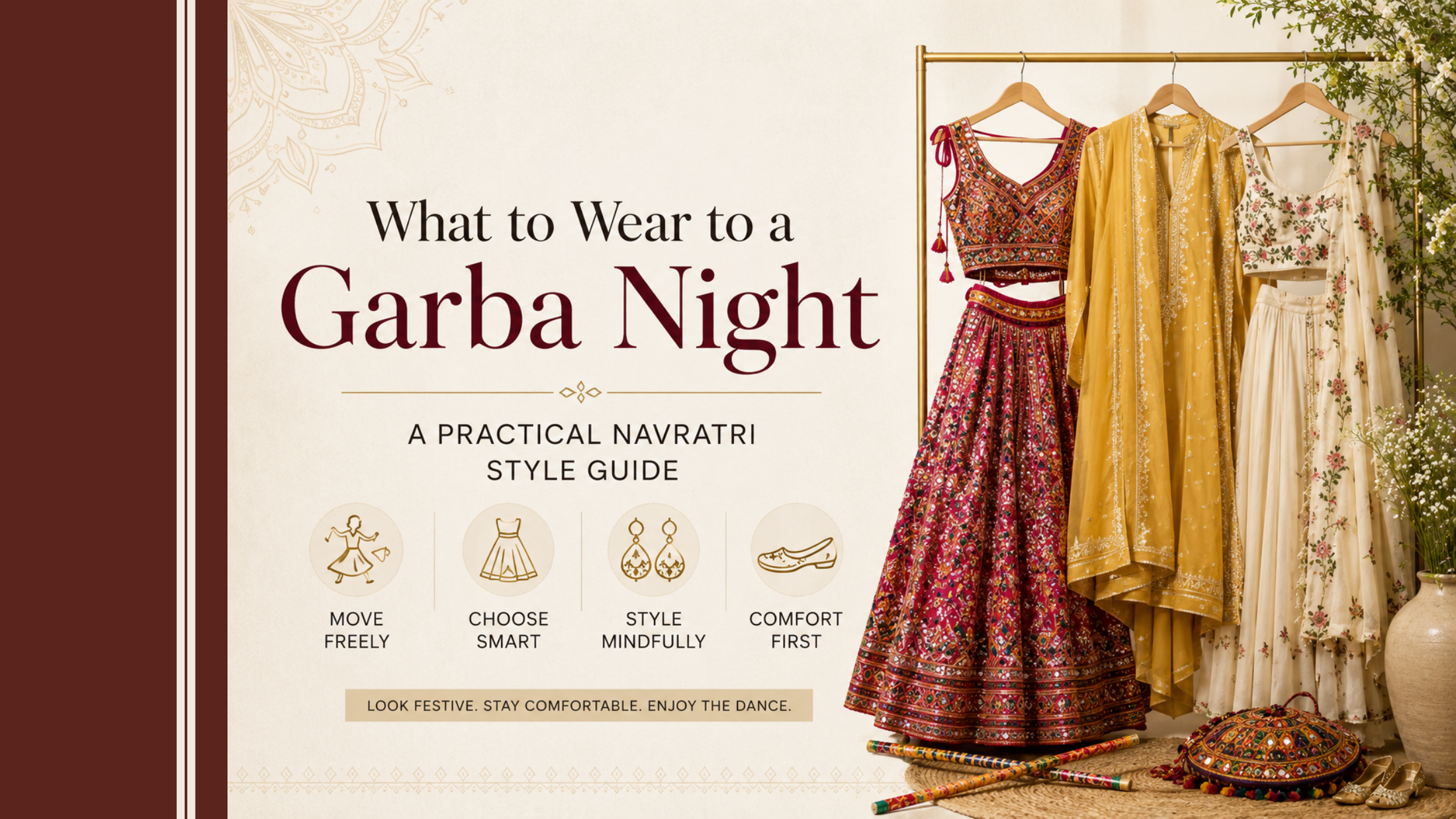
You find a Garba night happening in Delhi, make plans with friends and then comes the familiar question:
What am I actually going to wear?
A beautiful lehenga sounds obvious until you remember that you'll be walking, turning and dancing in it for hours. A heavy dupatta looks great when you're getting ready, but becomes considerably less charming when you're fixing it after every round of Garba.
That's what makes dressing for Garba different from dressing for most festive occasions.
The outfit needs to look celebratory, certainly. But it also needs to move with you.
So before choosing your Navratri outfit by colour, embroidery or what's currently trending, start with something much simpler:
Can I actually enjoy Garba in this?
Going to a Garba Night? Start With Movement
Imagine you're getting ready for a Garba night with friends.
You'll probably arrive looking perfectly put together. Then the music starts.
Within the next few hours you'll be raising your arms, turning, taking repeated steps, moving through circles and perhaps doing considerably more dancing than you planned.
This is where the difference between a good festive outfit and a good Garba outfit becomes obvious.
Before finalising yours, try it on and:
Raise your arms comfortably.
Nothing around the shoulders or armholes should pull.
Take a few large steps.
The skirt or bottom shouldn't restrict you.
Turn around a few times.
If you're already adjusting the outfit, imagine doing it after an hour of dancing.
Sit down.
Because eventually, you will.
It sounds obvious, but it's easy to forget these things when an outfit looks particularly good in the mirror.
Can You Wear a Lehenga to Garba?
Absolutely.
In fact, there's a reason a flared lehenga feels so natural during Garba the silhouette comes alive when you move.
But your Garba lehenga and wedding lehenga don't necessarily need to be the same kind of lehenga.
For a wedding reception, you may happily choose dense embroidery, a more structured construction and a heavier overall look.
For Garba, that same weight can become tiring surprisingly quickly.
Look instead for a lehenga that gives you movement through its flare without relying on excessive weight to create impact.
Embroidery, print, texture and colour can still make the outfit special. The idea isn't to dress plainly.
It's simply to avoid spending the second half of the night wishing you'd chosen something easier.
What If You Don't Want to Wear a Traditional Chaniya Choli?
You don't have to.
Traditional Garba dressing is beautiful, but not everyone wants to buy a highly specific outfit for one kind of occasion.
Maybe you're going to one Garba night with friends.
Maybe your personal style is more contemporary.
Or perhaps you're investing in designer clothing and would rather choose something you can bring back into your wardrobe after Navratri.
That's where a contemporary lehenga, festive co-ord or Indo-Western silhouette becomes interesting.
You can retain the colour, movement and celebratory feeling associated with Navratri without making the outfit feel like a costume you wouldn't wear again.
For someone who naturally dresses more minimally, that can actually feel much more authentic.
A Co-ord Can Work Surprisingly Well
A co-ord might not be the first outfit you associate with Garba, but the right one solves several practical problems.
There are fewer separate pieces to manage.
You don't necessarily have a dupatta falling from your shoulder.
And depending on the silhouette, you can have plenty of room to move.
The important distinction is between an everyday co-ord and an occasion co-ord.
For Navratri, look for something with enough colour, print, embroidery, texture or craftsmanship to feel celebratory.
The result can be especially good for a modern Garba event, a club celebration or an evening where the dress code isn't strictly traditional.
The Dupatta Test
If you're wearing a dupatta, secure it before leaving home.
Don't wait until you're standing at the venue trying to figure out what to do with it.
A drape that looks beautiful while standing still can behave very differently once you start dancing.
Pinning it securely or choosing a drape that keeps your arms free can make a significant difference.
And if the entire outfit only works when the dupatta is arranged in one very precise way, ask yourself whether that styling will realistically survive a full evening.
Sometimes the most beautiful solution is simply the one you don't have to think about again.
Don't Choose an Outfit Only Because It's the Navratri Colour
The nine colours associated with Navratri can be a lovely way to participate in the festival.
But they don't need to turn dressing into a rulebook.
If you're attending several nights, playing with the colours can make getting dressed part of the celebration.
If you're going to just one Garba evening, you don't necessarily need to build an entirely new wardrobe around a colour calendar.
Choose a shade that suits the occasion, photographs beautifully and most importantly feels like something you would actually enjoy wearing.
Navratri should still feel celebratory, not like completing a fashion assignment.
What Should Men Wear to a Garba Night?
Men have the same problem, just with fewer pieces to manage.
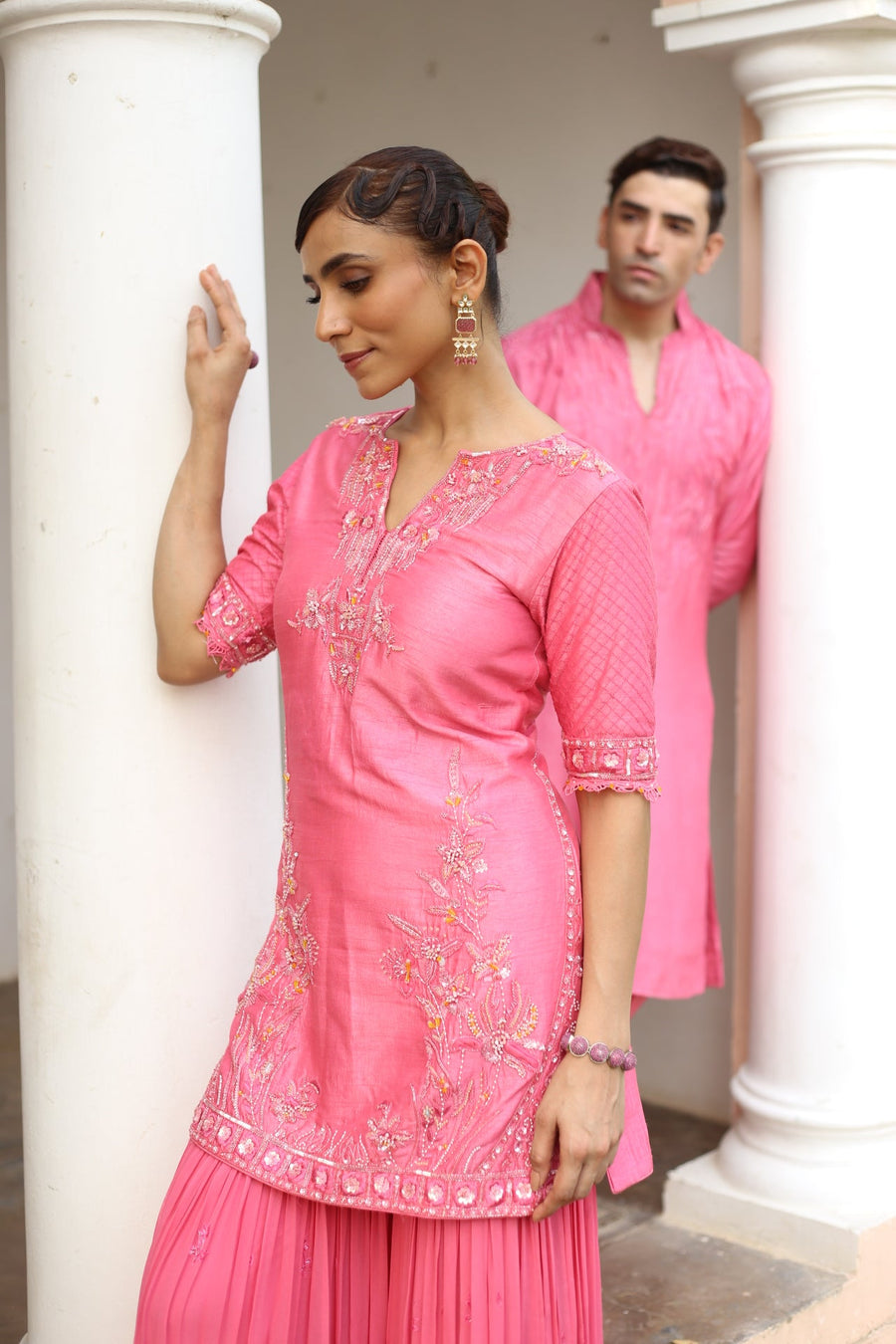
A kurta is the easiest starting point.
For a relatively relaxed Garba evening with friends, a well-cut festive kurta can be enough.
For a larger event or when you want the look to feel more considered, a Bundi can add structure without taking the outfit into wedding territory.
An Indo-Western look can also work for someone who wants something more contemporary.
But again, movement wins.
If the kurta feels restrictive around the shoulders when you raise your arms, it isn't suddenly going to become more comfortable after two hours of Dandiya.
Fit matters as much here as it does for women.
Think About Your Footwear Before the Outfit Is Finished
This is one detail people often decide last.
For Garba, it deserves to be decided much earlier.
You're going to spend a considerable amount of time on your feet, and the prettiest pair of shoes in your wardrobe isn't necessarily the pair you want to dance in all evening.
Comfortable juttis, flats or another secure low option can make much more sense than footwear you normally reserve for a wedding reception.
If you are buying new footwear, wear it before the event.
Garba night is a terrible place to discover that your beautiful new juttis start hurting after twenty minutes.
And Jewellery?
Navratri is one of those occasions where jewellery can genuinely become part of the personality of the look.
Statement earrings, bangles and more expressive accessories can turn a relatively simple outfit into something much more festive.
But use the same rule as the outfit:
Will this still be comfortable once I start moving?
Very heavy earrings or jewellery that repeatedly catches against the outfit can become distracting quickly.
You want your accessories moving with the look, not fighting against it.
Are You Going to Garba or Just Attending a Navratri Celebration?
There's an important difference.
If you're attending a family Navratri dinner, puja or festive gathering where you won't actually be dancing much, you have far more freedom.
That embroidered saree you've been waiting to wear?
Absolutely.
A more structured lehenga?
Much easier.
A heavier festive outfit?
No problem if the occasion supports it.
The movement rules become particularly important when you're genuinely going to spend the evening doing Garba or Dandiya.
So don't let an article including this one tell you that there's one compulsory “Navratri outfit.”
Dress for what you're actually doing.
Don't Buy an Outfit You'll Never Wear Again
This matters particularly when you're investing in designer clothing.
Navratri lasts nine nights. Your wardrobe should last considerably longer.
Before choosing something purely because it looks like a “Garba outfit,” think about where else it could go.
Could the lehenga be styled differently for a mehendi?
Could the blouse work with another skirt or saree?
Could the co-ord be worn to another festive occasion?
Could an Indo-Western piece come back for a sangeet or family celebration?
That doesn't mean every outfit needs to be basic.
It means good design should give you more than one opportunity to enjoy it.
The Best Garba Outfit Is the One You Stop Thinking About
You'll probably think about your outfit quite a lot while getting ready.
The colour.
The jewellery.
Whether the blouse sits correctly.
Whether everything works together.
But once you reach the Garba floor, the best outfit is the one you stop thinking about.
You're not holding the dupatta.
You're not pulling the blouse back into place.
You're not taking a break because the lehenga has become exhausting.
You're simply enjoying the evening.
And that is probably the most useful test of good festive dressing.
Planning Your Navratri Look in Advance?
At Label Maninder Gulati, our pieces are individually created and customised rather than treated as last-minute ready-to-wear.
If you're planning for Navratri or an upcoming festive occasion, explore our Lehengas and Co-ord Sets, or discover more styled looks through The MG Edit.
Choose something that works for the celebration and something you'll want to wear long after it.
Join the conversation
Share your thoughts about this story.