
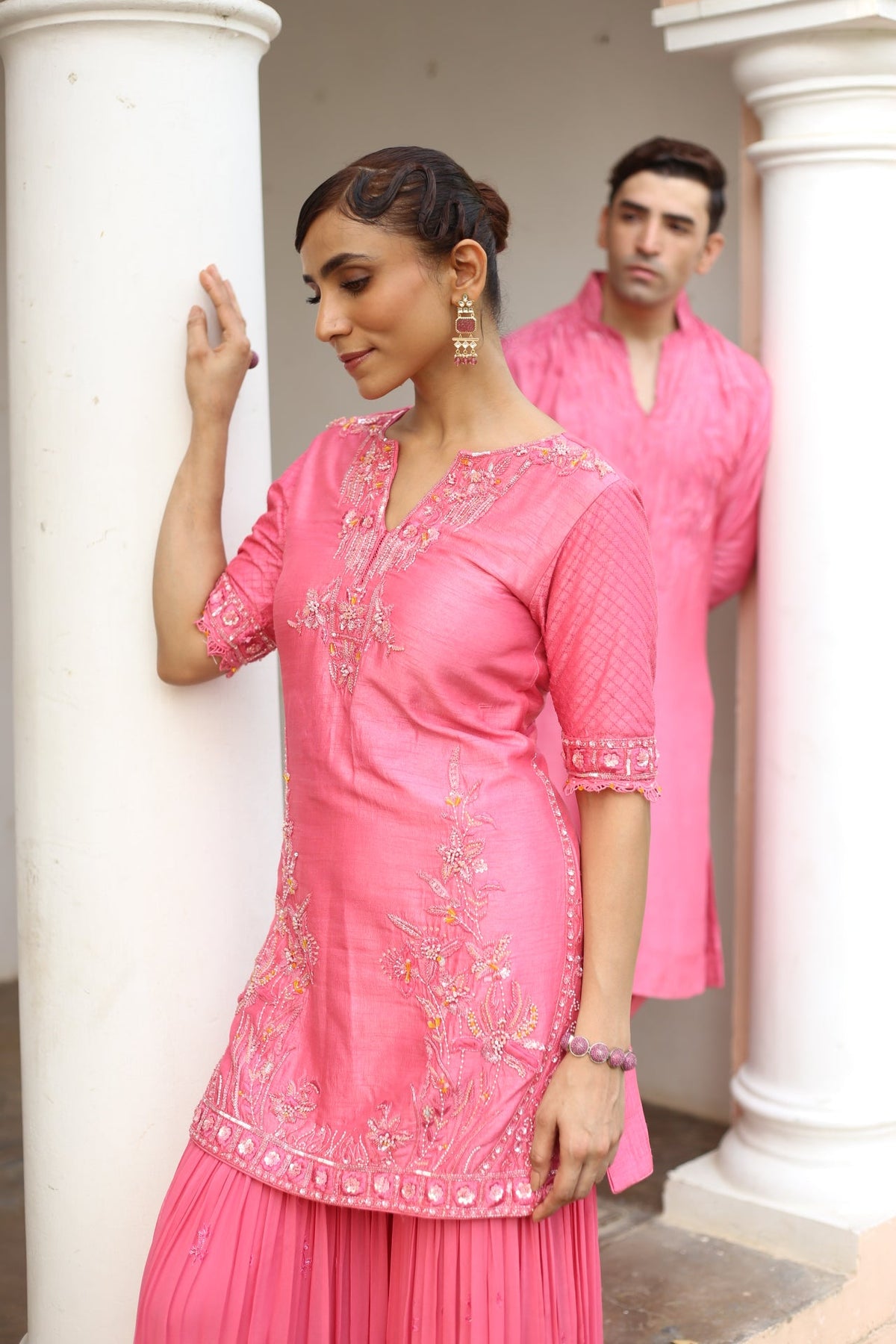
If you've ever stood in front of your wardrobe before an Indian wedding wondering, “Is this too much for a mehendi?” or “Am I underdressed for the reception?”, you're not alone.
Indian weddings don't really come with one dress code.
What works for your cousin's afternoon mehendi may feel completely out of place at an evening reception. What the bride's sister wears will naturally be different from what a colleague or distant relative chooses.
So instead of asking “What should I wear to an Indian wedding?”, start with a better question:
What am I attending and how dressed-up do I actually need to be?
Mehendi: Festive, but Don't Treat It Like the Wedding Day
Imagine it's your cousin's mehendi at a farmhouse in Delhi. The function starts in the afternoon, you'll probably be sitting for mehendi, meeting relatives, taking photographs and moving around for hours.
This isn't the occasion for an outfit you need to keep adjusting every ten minutes.
For women, a colourful co-ord, lighter lehenga, kurta set or an easy Indo-Western silhouette can work beautifully. You still want detail and personality just without the weight of a full wedding look.
For men, a well-cut kurta is often enough. Add a Bundi if the celebration is larger or the dress code feels more elevated.
And no, mehendi does not automatically mean you have to wear green.
If green works for you, wear it. If a rust, fuchsia, ivory or another shade looks better on you and there is no specified colour theme, there is no reason to force the cliché.
Think: festive + comfortable + daytime appropriate.
Haldi: This Is the One Time Practicality Really Matters
A haldi can look beautifully put together in photographs and become wonderfully chaotic five minutes later.
So before wearing something delicate or heavily embroidered, ask yourself whether you'll be comfortable getting close to the ceremony in it.
For a friend's haldi, an easy kurta set or contemporary co-ord may be all you need. If it's your brother's or sister's haldi, you can naturally go a little more dressed-up because you're part of the immediate family.
Yellow is traditional and always works, but unless the family has decided on a yellow dress code, it isn't your only option.
The simplest rule?
Don't wear something to a haldi that you'll spend the entire haldi trying to protect.
Sangeet: Dress Up, but Remember You'll Actually Be Moving
This is where you can have more fun.
A Delhi sangeet can go from family performances to a full dance floor very quickly, so the outfit has to do two jobs: look occasion-worthy and let you enjoy the evening.
For women, this is a natural place for a lehenga with movement, an embellished co-ord or a stronger Indo-Western look.
For men, an embroidered kurta, Bundi set or contemporary Indo-Western ensemble can feel appropriately dressed without immediately moving into groom territory.
Before finalising the outfit, do one very simple test:
Can you comfortably sit, walk and dance in it?
If the answer is no, the outfit may look great in the mirror but probably isn't right for a sangeet.
The Wedding: Your Relationship With the Couple Matters
This is where generic wedding advice usually falls short.
Suppose you're attending two weddings.
At the first, the groom is your colleague.
At the second, the bride is your sister.
You probably shouldn't approach both wardrobes in exactly the same way.
If you're immediate family, richer embroidery, more elaborate jewellery and stronger silhouettes naturally make sense. A lehenga with considerable craftsmanship or a more formal saree won't feel excessive because of your role in the celebration.
If you're a friend, colleague or more distant guest, you can still dress beautifully without trying to match the visual weight of the immediate family.
For women, sarees, lehengas and refined Indian silhouettes all work.
For men, the progression might be:
Kurta → Bundi Set → Indo-Western → Sherwani
The closer you are to the wedding and the more formal the celebration, the further you can comfortably move along that scale.
A sherwani isn't automatically “too much” for a guest. But a heavily embellished groom-style sherwani at your office colleague's wedding? Probably unnecessary.
Context changes everything.
Reception: This Is Where You Can Lean Into Personal Style
The reception is usually less restrictive than the wedding ceremony itself.
If traditional dressing isn't really your style, this may be the function where a contemporary silhouette feels most natural.
A saree with an interesting blouse, a structured co-ord, a contemporary lehenga or an Indo-Western look can all make sense for women.
For men, a sharper Indo-Western ensemble can work particularly well for an evening reception.
And because receptions are often evening events, deeper colours, metallic detailing and stronger silhouettes usually sit comfortably here.
The aim isn't to add as much embroidery as possible.
It's to look finished.
“But Am I Overdressed?”
This is probably the question worth asking before leaving home.
And the answer isn't determined by how much embroidery your outfit has.
Think about four things:
Who is getting married?
Your sibling's wedding and your colleague's wedding aren't the same dressing situation.
Which function is it?
A daytime haldi and a Saturday-night reception aren't asking for the same outfit.
Where is it happening?
An intimate home mehendi and a large hotel wedding naturally have different levels of formality.
What does the invitation say?
If the couple has given you a colour palette or dress code, follow it.
If your outfit makes sense on all four counts, chances are you're not overdressed.
What About Colours?
Indian weddings give you a lot of room to enjoy colour.
Pastels can be beautiful for daytime functions. Jewel tones and deeper shades work naturally for evenings. Ivory and neutrals can look particularly refined when the styling and craftsmanship give them enough occasion.
You don't need to follow every “never wear this colour to an Indian wedding” rule you find online.
Indian weddings differ enormously across families, communities and regions.
If the invitation asks guests to avoid a particular colour, respect it. If you're immediate family and unsure whether something feels too bridal, ask the bride or family.
That answer is worth more than a generic internet rule.
The Outfit Should Still Feel Like You
It is easy to get carried away with wedding trends.
One season everyone is wearing pastels. The next it's jewel tones. Then metallics. Then minimal embroidery.
But when you're investing in designer occasion wear, choosing something solely because it is trending for one wedding doesn't make much sense.
Choose the level of dressing for the occasion.
Then choose the colour, silhouette and craftsmanship for you.
The right wedding guest outfit shouldn't make you feel like you're wearing a costume for somebody else's celebration. It should let you walk into the room feeling appropriately dressed and still recognisably yourself.
Planning for an Upcoming Wedding?
At Label Maninder Gulati, our occasion wear is created and customised individually rather than treated as last-minute ready-to-wear.
If you are dressing for an upcoming wedding, explore our Sarees, Lehengas, Co-ord Sets and Indo-Western styles for women, or discover Kurtas, Bundi Sets and Indo-Western occasion wear for men.
Choose according to the celebration. We can take it from there.
Looking for more styling inspiration? Explore The MG Edit to discover Maninder Gulati looks through our latest edits and styled outfits.
Join the conversation
Share your thoughts about this story.