
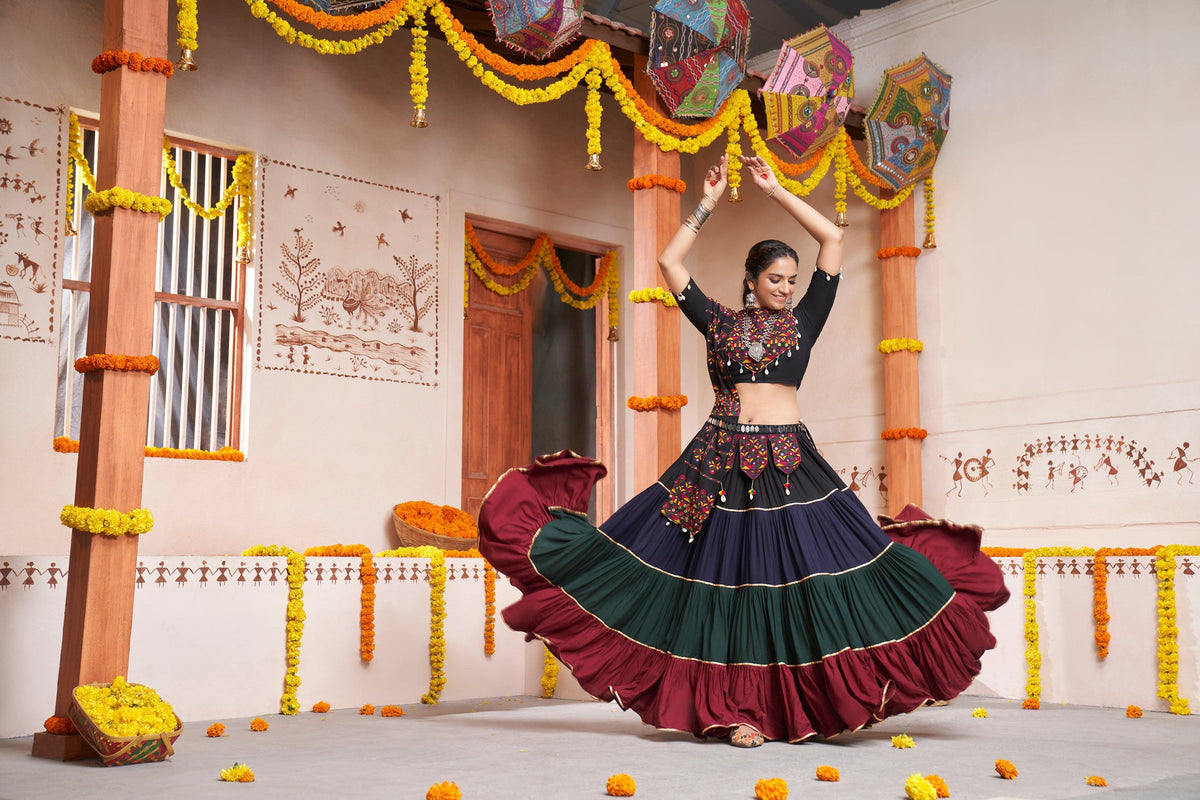
Navratri brings nine days of celebrations, family gatherings, temple visits and, for many of us, evenings filled with Garba and Dandiya.
And somewhere between planning which events to attend and coordinating with friends, another question comes up: What colour are we wearing tomorrow?
Following the nine colours of Navratri is a tradition many families and communities enjoy. Some people plan their outfits for all nine days, while others simply add the day's colour through a dupatta, jewelery or another small detail.
But dressing for Navratri doesn't mean buying nine completely new outfits.
In fact, a few thoughtfully chosen pieces, some clever combinations and a little planning can take you through the celebrations without making your wardrobe unnecessarily complicated.
Here's how to approach the nine Navratri colours in 2026 while keeping your outfits comfortable, festive and true to your personal style.
What Are the Nine Colours of Navratri 2026?
For Sharad Navratri, beginning on 11 October 2026, the following is a commonly published day-wise colour sequence.
|
Day |
Date |
Colour |
|---|---|---|
|
Day 1 |
11 October |
Orange |
|
Day 2 |
12 October |
White |
|
Day 3 |
13 October |
Red |
|
Day 4 |
14 October |
Royal Blue |
|
Day 5 |
15 October |
Yellow |
|
Day 6 |
16 October |
Green |
|
Day 7 |
17 October |
Grey |
|
Day 8 |
18 October |
Purple |
|
Day 9 |
19 October |
Peacock Green |
Note: Navratri colour calendars and observances can vary between sources and communities. Confirm the schedule followed by your family or local celebrations before planning your outfits.
Day 1: Orange - Start With Something Bright
Orange has a natural festive energy. It's warm, cheerful and particularly beautiful during daytime celebrations.
If you already own an orange kurta, an embroidered suit or a printed co-ord, this is a good opportunity to wear it again.
An orange kurta with ivory trousers can look polished without much additional styling. For a family gathering, add gold-toned earrings and comfortable footwear.
For Garba, consider a printed orange lehenga or a skirt with enough movement to dance comfortably.
And if a completely orange outfit feels too bright for you, try a rust or burnt-orange dupatta with a neutral ensemble.
The colour doesn't have to dominate your entire look.
Day 2: White - Let the Details Do the Work
White and ivory outfits can be especially beautiful during Navratri.
The trick is to focus on texture rather than adding too many accessories.
An ivory kurta with delicate embroidery, a printed white co-ord or a simple suit with an interesting dupatta can feel appropriately festive.
For an evening celebration, add silver jewelry or a contrasting embroidered dupatta.
If you're attending Garba, consider the practical side too. An elaborate floor-length white outfit might look lovely in photographs, but crowded dance grounds aren't always the easiest place to keep it spotless.
Choose a length and silhouette that allow you to move freely.
Day 3: Red - Make It Festive Without Overdoing It
Red rarely needs much help looking festive.
A red saree, embroidered kurta set or flowing skirt can make a beautiful Navratri outfit.
For daytime puja, a simple red suit with restrained jewelry is often enough.
For an evening event, you can bring in richer textures, traditional earrings or an embroidered blouse.
If you're rewearing a red outfit from a wedding or another celebration, change the styling rather than trying to reinvent the entire garment.
A different blouse, lighter jewelry or a simpler dupatta can make the same outfit feel appropriate for a different occasion.
And remember, a heavily embroidered red lehenga isn't automatically the most practical choice for Garba.
Day 4: Royal Blue - A Strong Choice for Evening Celebrations
Royal blue is particularly effective under evening lighting.
It has enough depth to stand out without needing excessive embellishment.
A royal-blue lehenga with a lighter dupatta, an embroidered suit or a structured co-ord can all work beautifully.
If your outfit already has noticeable embroidery, keep the jewelry relatively simple.
If it's a plain silhouette, you can introduce contrast through silver accessories, an embroidered jacket or a printed dupatta.
For Garba, pay attention to how the garment moves. A lighter skirt that falls well can be far more enjoyable than an elaborate outfit that restricts your steps.
Day 5: Yellow - Keep It Fresh and Comfortable
Yellow is a lovely choice for daytime celebrations.
Mustard, marigold and softer yellow tones can all be styled differently depending on the event.
A yellow kurta with ivory trousers is easy to put together. A printed yellow co-ord can feel more contemporary, while a lehenga with floral detailing works well for a festive gathering.
If you already have a yellow outfit from a Haldi ceremony, there's no reason it cannot be worn again.
Change the jewelry, hairstyle or dupatta to give it a different character.
For an outdoor event, breathable fabrics and manageable sleeves will make a noticeable difference.
Day 6: Green - From Daytime Puja to Garba Night
Green offers plenty of possibilities.
Olive, emerald, bottle green and brighter festive greens can all create very different looks.
An olive embroidered co-ord can work for a smaller family celebration. A green suit with a contrasting dupatta feels more traditional, while a flowing lehenga can be a beautiful option for Garba.
If you're wearing a heavily detailed green outfit, you don't necessarily need a statement necklace as well.
Choose accessories that complement the embroidery rather than compete with it.
This is also a good day to reuse an outfit you already love but haven't had an occasion to wear recently.
Day 7: Grey - Give a Neutral Colour a Festive Touch
Grey might not be the first colour that comes to mind when planning Navratri outfits, but it can look beautiful with the right styling.
A soft grey saree with silver detailing, a charcoal embroidered kurta or a grey co-ord with a contrasting dupatta can feel refined and festive.
The important thing is to avoid making the outfit look like everyday office wear.
Texture helps here.
Embroidery, woven details, mirror work or interesting jewelry can change the character of a relatively simple garment.
If you don't own a grey outfit, a grey dupatta or blouse can be enough to incorporate the day's colour.
Day 8: Purple - Bring in Richer Festive Details
Purple can be particularly striking for evening celebrations.
Deep plum, aubergine and brighter purple shades work beautifully with embroidery and traditional jewelry.
For a family function, a purple kurta set or saree can feel appropriately dressed-up.
For Garba, a lighter lehenga or an outfit with a comfortable, flowing silhouette is worth considering.
Don't assume that a darker colour requires heavier accessories.
Sometimes a beautifully cut outfit with statement earrings creates a more complete look than several elaborate pieces worn together.
Day 9: Peacock Green - Finish With Something Special
The final day is a lovely opportunity to wear an outfit you've been saving.
Peacock green, with its rich blue-green character, can look particularly beautiful in festive silhouettes.
Consider a peacock-green saree, an embroidered suit or a lehenga styled with gold-toned jewelry.
If you have an outfit in a similar teal or blue-green shade, you may be able to style it around the day's colour rather than buying something new.
For the final Garba evening, choose something that feels celebratory but still allows you to enjoy the occasion.
After all, the last night is not the time to spend the evening adjusting your outfit.
Do You Really Need Nine Different Outfits?
Not at all.
If you enjoy dressing in a different colour every day, you can still do that without purchasing nine new ensembles.
Start by checking what you already own.
You might have a red saree from a family wedding, a yellow suit from a Haldi function, a green kurta set or an ivory co-ord that hasn't been worn in months.
The same outfit can look different with a contrasting dupatta, a new blouse, different earrings or a change of footwear.
Separates are particularly useful here.
An embroidered skirt can work with more than one blouse. A festive jacket can be styled over a simple kurta. A printed co-ord can be worn together or as individual pieces.
If you're adding something new to your wardrobe, choose it because you genuinely like the design and can imagine wearing it again, not simply because you need to complete a colour chart.
Planning to Attend Garba? Comfort Matters More Than You Think
A beautiful outfit is only part of a good Garba night.
You may be dancing for hours, moving through crowds and spending considerably more time on your feet than expected.
That makes a few details worth checking before leaving home.
The skirt: Make sure it doesn't constantly get caught under your feet when you turn.
The blouse: Raise your arms during your fitting. If the sleeves pull or the neckline shifts, have the fit adjusted.
The dupatta: Secure it properly, especially if you plan to dance.
The jewelry: Heavy earrings and loosely fitted bangles can become uncomfortable after repeated movement.
The footwear: Choose something you can genuinely dance in. This isn't the evening to experiment with unfamiliar heels.
For more detailed outfit advice, read our guide to What to Wear to a Garba Night, including how to choose silhouettes and accessories that work for the celebration.
How to Build a Navratri Wardrobe You'll Wear Again
Instead of planning nine disconnected looks, think about creating a small festive wardrobe that works across different occasions.
A printed co-ord can be worn to a Navratri gathering and later styled for a family lunch.
An embroidered kurta set can work for Diwali, a Mehendi or another festive celebration.
A lehenga with a versatile blouse can be restyled for a wedding function.
And a saree you already own can feel completely different with new jewellery or a contrasting blouse.
If you're considering adding a few pieces, explore the Co-ord Sets and Lehengas Collection at Label Maninder Gulati for designs you can style beyond a single celebration.
The idea isn't to have fewer festive moments.
It's to make more thoughtful choices about what you wear to them.
Celebrate Navratri Your Way
The nine colours of Navratri can be a lovely way to participate in the celebrations, coordinate with friends and family and bring a little more thought into everyday festive dressing.
But following the colours shouldn't turn into pressure to buy something new every morning.
Wear the outfit that makes sense for your plans.
Repeat pieces you love.
Experiment with colours through accessories.
And when you're choosing something new, think about the fit, fabric and how often you'll enjoy wearing it again.
Because the best part of Navratri isn't having nine completely different outfits.
It's having nine days of celebrations worth getting dressed for.

Join the conversation
Share your thoughts about this story.